


About Tiny Golf King
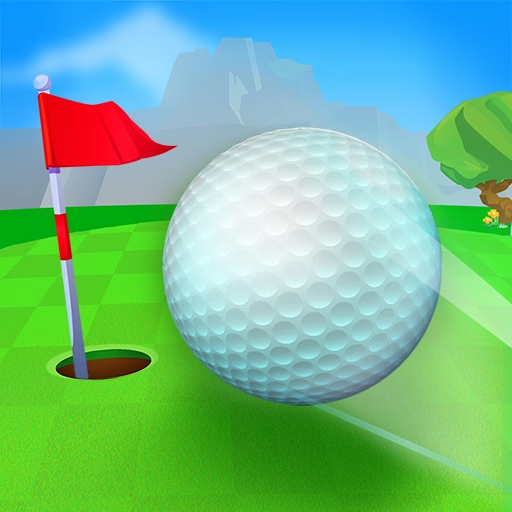
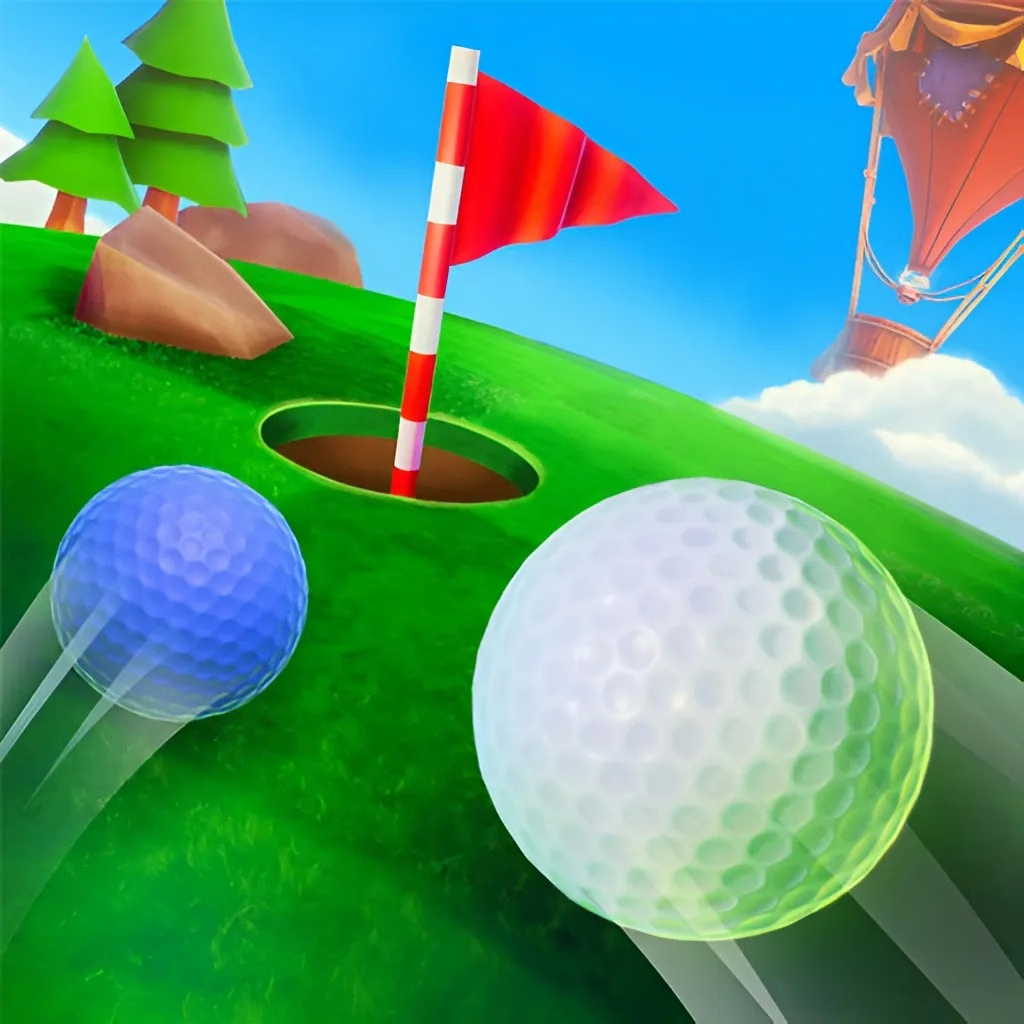
Tiny Golf King puts the ball on small courses where a slight change in angle can make a large difference. Hold the ball and pull back to prepare a shot, using the dotted guide to read its initial direction. The cup remains the goal, but barriers and course shapes make direct putting only one possible solution.
The level collection provides repeated opportunities to learn that relationship between the guide and the actual roll. A useful aim line still needs appropriate power, and a planned wall contact still needs somewhere sensible to send the ball afterward. Progress comes from treating each layout as a new arrangement of familiar controls, rather than applying the same strong pull to every opening.
How to Play Tiny Golf King
Hold the ball, drag back to set direction and power, and release to shoot. Read the dotted guide and the course geometry together, then reach the hole to continue through the levels.
- Find the cup and identify anything blocking the direct route.
- Hold and pull back until the guide shows the intended line.
- Release with strength suited to the distance and any rebound.
- Observe the stopping position and finish the hole with the next appropriate shot.
Controls & Timing
A guide, not a complete solution
The dotted line helps with the initial direction. You still need to consider obstacles and the ball’s movement after contact.
Pull distance matters
A longer preparation changes the strength of the shot. Small adjustments are useful when the target is close or the landing area is narrow.
Course geometry repeats in new ways
Later layouts combine familiar aiming decisions with different arrangements of barriers. Transfer what you learned about the controls without assuming the route is identical.
Controls
| Input | Action | When to use |
|---|---|---|
| Hold the ball | Begin preparing a shot. | Before selecting a line. |
| Drag backward | Adjust aim and force. | While reading the dotted guide. |
| Release | Send the ball along the prepared direction. | When the shot is ready. |
High Score Tips
- Aim for the opening in a barrier. Identify the space the ball must pass through before concentrating on the cup. A clear final target is irrelevant if the first obstacle blocks the shot.
- Inspect the rebound destination. A wall can redirect the ball, but the outgoing path must be useful. Think beyond the point of impact to avoid trading one blocked position for another.
- Use misses as measurements. A shot that stops just short provides information about distance. Make a modest power correction instead of replacing a nearly useful line with a completely different attempt.
- Reassess on each new level. The same controls do not imply the same safe strength. Read the new layout before releasing, particularly when a visually similar opening has different space behind the hole.
Key Features
- More than forty-five levels. A substantial set of layouts develops the same core putting controls.
- Dotted aiming guide. A visible direction aid helps prepare the opening path.
- Compact obstacle courses. Barriers make bank shots and intermediate positions useful.
- Measured mouse shots. Holding, dragging, and releasing separate preparation from commitment.
Frequently Asked Questions
What does the dotted line show?
It helps you judge the direction you are preparing. Treat it as an aiming aid and still inspect the course, especially when the shot will meet a wall before reaching the cup.
How do I control a short putt?
Use a smaller pull suited to the remaining distance. A near cup usually calls for a finer adjustment than the opening stroke, even when both shots follow a similar line.
Can I use walls to change direction?
A planned wall contact can help reach an otherwise awkward part of the course. Check where the ball should travel afterward and choose enough strength for the whole route.
How many levels are there?
The published browser listings describe more than forty-five levels. Focus on learning the current layout; the useful progression is understanding how each arrangement changes your angle and power decisions.
Why did a good-looking aim still miss?
The initial direction is only part of a shot. Too much strength or an unplanned obstacle contact can change the result, so inspect the complete roll before adjusting your next attempt.