







About Mini Putt Gem Forest
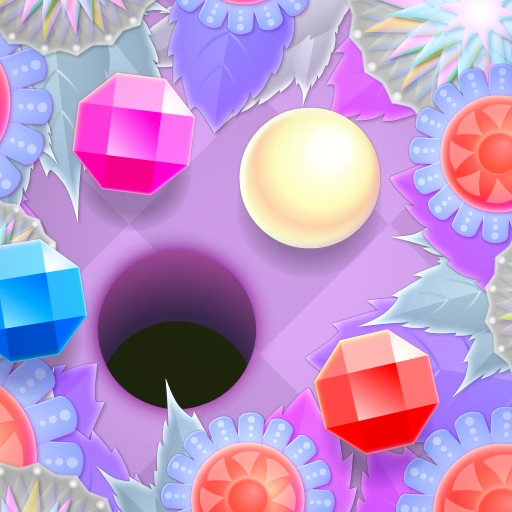
Mini Putt Gem Forest gives a putt two possible jobs: move toward the cup and collect gems along the way. Those objectives can support each other, but not every glittering detour is efficient. Plan where the ball will be after collecting a group, because the next approach still needs a route to the hole.
The eighteen holes are divided between two forest settings and include hazards and teleports. That creates more to consider than a direct line across grass. A portal can connect separated areas of a course, while a dangerous patch can make an otherwise attractive collection route expensive. The strongest plan links useful pickups with a manageable finish instead of treating the cup as an afterthought.
How to Play Mini Putt Gem Forest
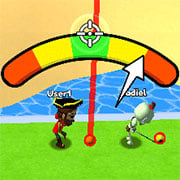
Prepare the putt with a mouse drag and release toward the cup. Collect gems along workable routes, account for hazards and teleports, and complete the hole without spending unnecessary strokes.
- Inspect the cup, gem groups, and hazardous areas.
- Select a route that connects useful collection with a feasible finish.
- Adjust direction and strength, then release the shot.
- Continue from the resulting position until the ball reaches the hole.
Controls & Timing
Collection changes the route
A gem group gives you a reason to leave the direct line. Include the return toward the cup when deciding whether that detour is useful.
Teleports connect space
Entering a teleport can move the ball to another part of the course. Inspect the destination area so that reaching the entrance is part of a complete plan.
Hazards impose a cost
Some apparent shortcuts cross dangerous ground. Compare the possible pickup with the difficulty of recovering if the ball does not take the intended path.
Controls
| Input | Action | When to use |
|---|---|---|
| Hold the mouse button | Prepare a putt. | Before aiming at a route. |
| Drag | Adjust shot direction and strength. | While judging gems and obstacles. |
| Release | Hit the ball. | When the intended path is clear. |
High Score Tips
- Group nearby pickups into one line. Look for gems that can be collected during the same useful stroke. This avoids creating a separate approach for every item simply because it is visible.
- Keep an exit from the collection area. Before aiming into a cluster, inspect how the ball can leave it. A rich-looking detour may be inefficient if it stops behind a barrier with no simple return.
- Use portals deliberately. A teleport is helpful when its destination improves the route. Do not enter one automatically without checking whether it moves the ball away from the remaining gems or cup.
- Review the stroke cost of a detour. After finishing a hole, consider which extra putts were caused by collection. That gives a concrete way to improve the next attempt without abandoning the gem objective entirely.
Key Features
- Eighteen holes. A defined course set provides a complete putting challenge.
- Two forest settings. Different themed areas frame the obstacle layouts.
- Gem collection. Pickups create decisions beyond simply reaching the cup.
- Hazards and teleports. Special course elements change which routes are useful.
Frequently Asked Questions
Are gems the only objective?
No. You still need to put the ball in the hole. Treat gem collection as part of the route to a finish, including the strokes needed to return from a detour.
How many holes are there?
There are eighteen holes across two themed courses. Learn the current layout before moving on, since a similar-looking gem arrangement may have a different obstacle or finishing angle.
What should I inspect around a teleport?
Look at the destination area as well as the entrance. A teleport can solve a separation problem, but it is only useful when the next position supports your collection or finishing route.
Should I take a hazardous route for more gems?
Compare the likely gain with the cost of a mistake. A controlled route that collects fewer gems can be preferable when the alternative repeatedly creates difficult recovery shots.
How do I improve without changing every shot?
Identify one inefficient detour or unnecessary recovery in the completed hole. Keep the successful parts of the route and revise that section so the next attempt tests a specific improvement.