






About Mini Golf Fancade
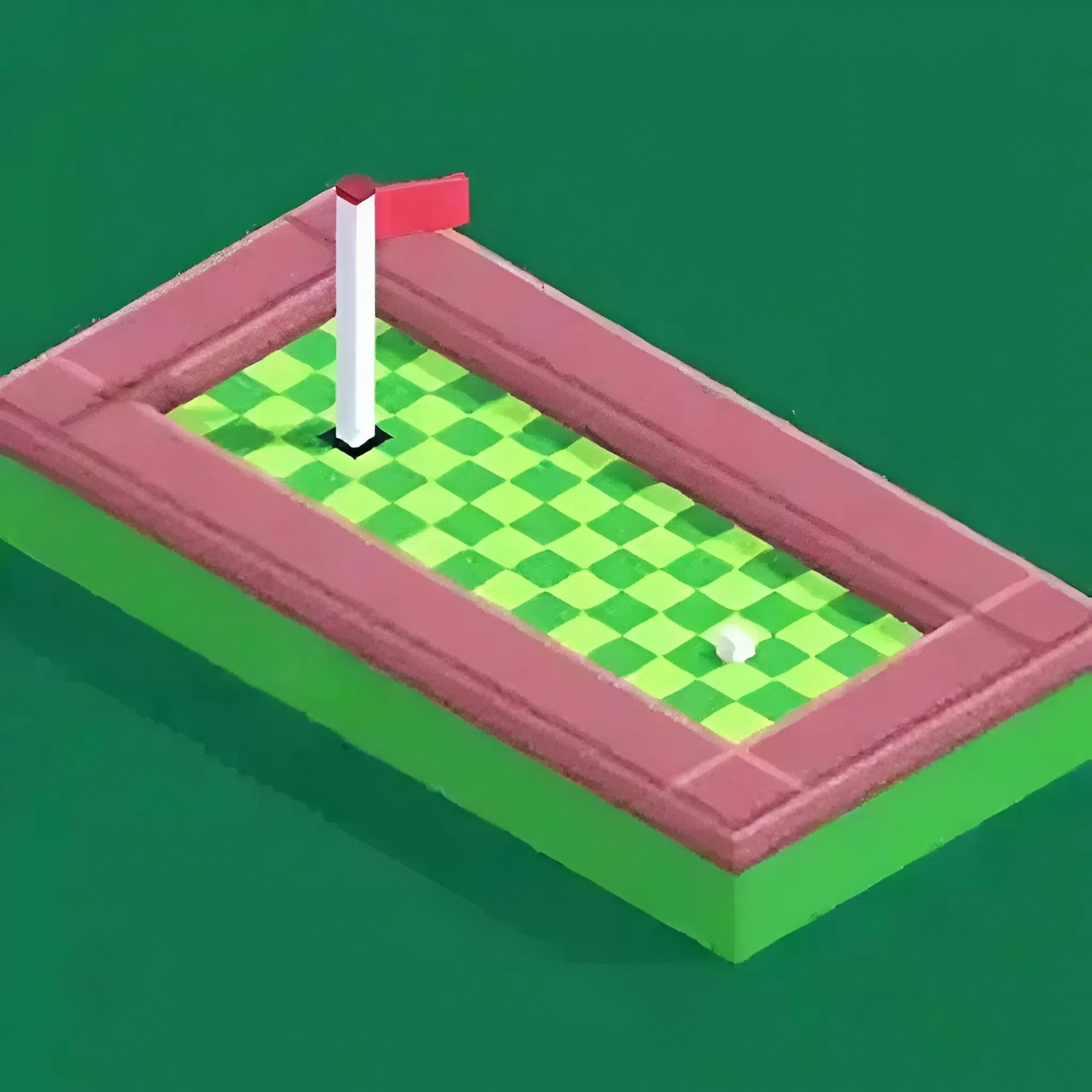
Mini Golf Fancade makes a familiar putt look unfamiliar. The ball, walls, and fairways have a blocky appearance, and the tight corners encourage you to inspect the entire route before pulling back. Your goal is to reach the flagged hole within a limited number of shots. A powerful launch can cover the opening stretch but still leave the ball outside the course.
The challenge develops across fifty levels. Narrow turns and changes in surface make it useful to distinguish a shot that reaches the next opening from one that actually leaves a good position there. You have time to prepare the direction and force, but each release spends part of the allowance. Watching the ball settle teaches you more than simply noticing whether it moved closer to the flag.
How to Play Mini Golf Fancade
Pull back to prepare the shot and release to move the ball toward the flagged hole. Work around the course walls and finish before using the available strokes, keeping the ball away from exposed edges.
- Inspect the route from the ball to the flag.
- Choose an opening or landing that the next shot can use.
- Prepare the direction and force, then release.
- Observe the stopping position and continue within the remaining allowance.
Controls & Timing
Angular routes
A corridor may require a change of direction before the hole becomes reachable. Aim for a useful wall contact or intermediate position instead of forcing a blocked straight line.
The boundary matters
A shot outside the designated course wastes an attempt. Include the space beyond the intended landing when judging how much force is safe.
Finishing power
The ball can pass over the hole when moving too strongly. Reduce the force for a close approach rather than repeating the opening shot.
Controls
| Input | Action | When to use |
|---|---|---|
| Hold the ball | Prepare a shot. | When ready to aim. |
| Pull backward | Choose direction and force. | Before committing the stroke. |
| Release | Send the ball toward the target. | After checking the course boundary. |
High Score Tips
- Read the last turn first. Find the place from which the cup has a clear approach, then work backward through the corners. This turns a maze-like layout into a sequence of reachable positions.
- Use broad wall faces. When planning a rebound, a clear section of wall is easier to judge than a crowded corner. The purpose is a predictable outgoing route, not contact for its own sake.
- Keep a useful miss. If the ball followed the intended line but stopped short, adjust the strength modestly. Starting again with an entirely different angle throws away information the previous stroke supplied.
- Budget for the finish. An approach still needs another stroke unless it reaches the cup. Count that continuation before choosing a route that spends most of the allowance crossing the opening area.
Key Features
- Fifty compact levels. The course collection develops the same basic aiming action through new layouts.
- Blocky presentation. Angular fairways give each route a clear geometric shape.
- Limited strokes. Each attempted solution must fit the available shot allowance.
- Course-boundary risk. Keeping the ball on the playing surface is part of completing a hole.
Frequently Asked Questions
Is a stronger shot always better?
No. Extra force can carry the ball past a useful landing or over the hole. Choose the amount needed for the current route, especially when there is little room beyond the target.
Why plan an intermediate landing?
Some corners block a direct finish. A carefully chosen stopping position can open the next line, making two deliberate strokes more useful than several attempts at an impossible straight route.
How many levels are included?
The game contains fifty levels. Treat each new layout as a different route problem rather than assuming that a shot which worked on the previous course will use the same strength.
What should I watch after releasing?
Follow the complete movement until the ball settles, including wall contacts and any drift toward an edge. That final position determines the next shot and explains whether the chosen power was appropriate.
How can I make a close putt more reliable?
Prepare a smaller pull and check the direct line into the cup. Near the finish, excess speed creates avoidable overshoots, so the force needed is often much lower than earlier in the route.