


About Kinda Hard Golf
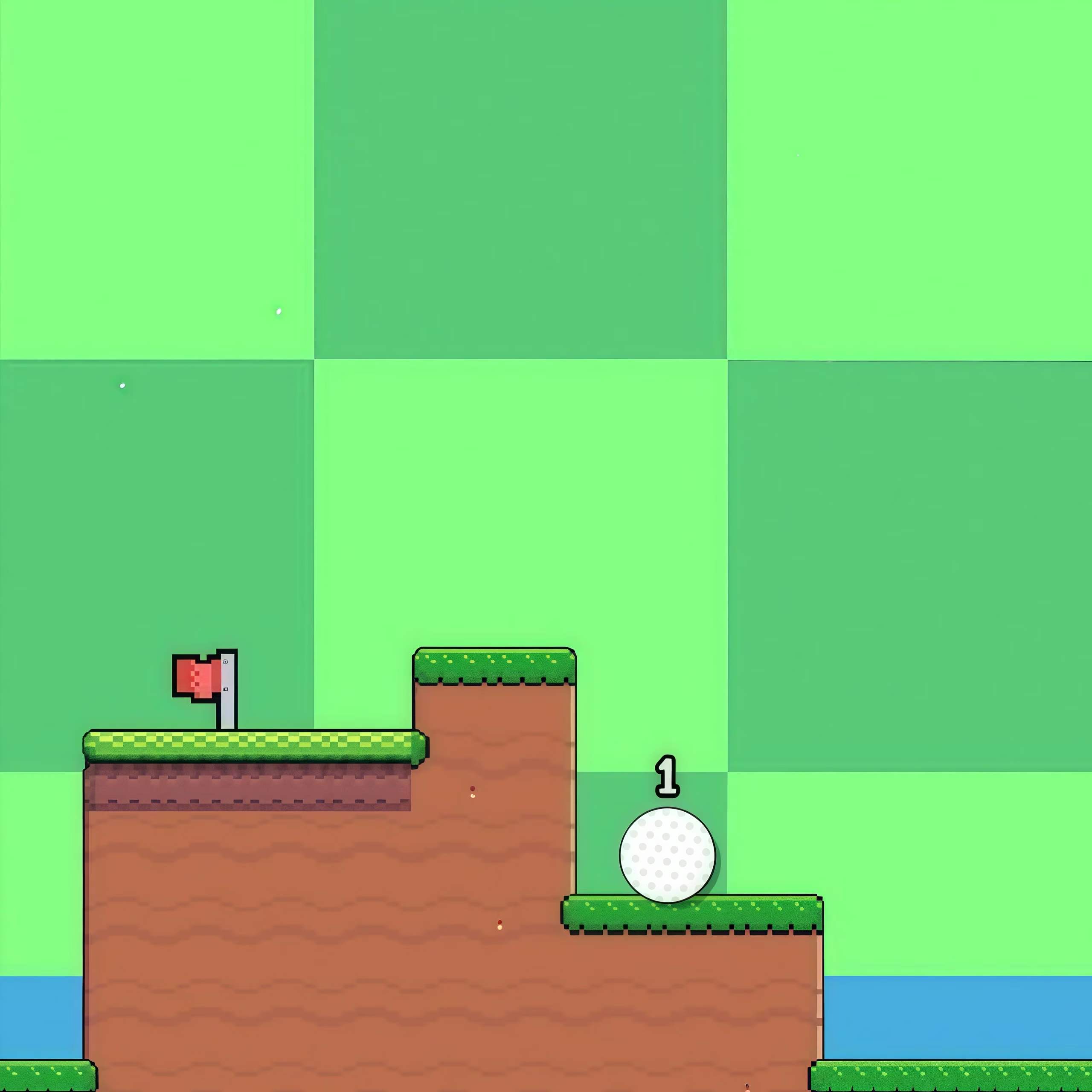
Kinda Hard Golf points the challenge upward. Instead of moving across a comfortable fairway, you launch a ball between ledges and try to reach the top of a compact vertical course. A shot must gain enough height while also finding a landing that will not send the ball back down.
The daily course gives everyone a fresh arrangement to solve, while checkpoint flags divide the climb into recoverable sections. Reaching a flag can be a more useful immediate target than attempting a spectacular shortcut. Players who want a harsher challenge can use Kinda Infuriating mode, which removes checkpoints. The route may look small, but height, landing space, and the cost of falling make each stroke a real decision.
How to Play Kinda Hard Golf
Drag and release the ball to climb toward the top of the daily course. Land on useful ledges and reach checkpoint flags so that a later fall does not undo the whole climb.
- Inspect the next ledge and the route toward a checkpoint flag.
- Prepare an angle that provides both height and a reachable landing.
- Release, then watch where the ball settles.
- Continue the climb to the finish, adjusting the next attempt after a fall.
Controls & Timing
Height needs a landing
A shot that clears a ledge can still fail by carrying too far. Balance the upward movement with the space available for the ball to settle.
Flags protect progress
Checkpoint flags provide recovery points during the climb. Reaching one changes the cost of experimenting on the next section.
A checkpoint-free option
Kinda Infuriating mode removes that recovery support. Treat it as a different risk decision rather than assuming every mode protects the same progress.
Controls
| Input | Action | When to use |
|---|---|---|
| Hold the ball | Prepare the next stroke. | When ready to leave the current ledge. |
| Drag | Choose launch angle and strength. | While targeting a higher landing. |
| Release | Send the ball into the climb. | Once the trajectory is prepared. |
High Score Tips
- Choose a landing before a power level. Start with the ledge you want to occupy, then decide how much force reaches it. Beginning with a maximum pull makes it easy to overlook overshoot.
- Respect the edge behind the ball. A poor landing can turn a small miss into a long fall. Where possible, aim for space that leaves room for the ball’s remaining motion.
- Secure the next flag. A checkpoint can be worth a less direct route because it limits later losses. Evaluate it by the attempts it can preserve over the rest of the climb.
- Study one section at a time. Use a reached checkpoint to understand the next jump’s angle and strength. Learning a local solution is more effective than repeatedly imagining a perfect run from the start.
Key Features
- Vertical golf. The objective is to climb a compact course rather than cross a flat fairway.
- Daily layout. A new course provides a fresh route to work out.
- Checkpoint flags. Recovery points divide the ascent into manageable sections.
- Kinda Infuriating mode. An optional checkpoint-free challenge raises the cost of falling.
Frequently Asked Questions
What do the flags do?
They act as checkpoints during the climb. Reaching one protects progress through the earlier section, allowing you to focus on the next set of ledges when a later shot goes wrong.
Does a daily course mean only one attempt?
No. The daily schedule describes the changing course, not a one-shot limit. You can work on the route and use what failed attempts teach you about its ledges and landings.
Why does a high shot still fail?
Height alone does not secure progress. The ball also needs to land and remain on useful ground, so excess horizontal travel or a narrow landing can undo a successful climb.
What changes in Kinda Infuriating mode?
Checkpoints are removed, making a fall much more costly. Approach that option after learning how to control landings, because the normal recovery points no longer protect completed sections.
How can I reduce my stroke count?
Learn stable landing positions and the power needed to reach them. A repeatable sequence usually saves more strokes than a dramatic shortcut that repeatedly drops the ball back down.