



About Sky Golf
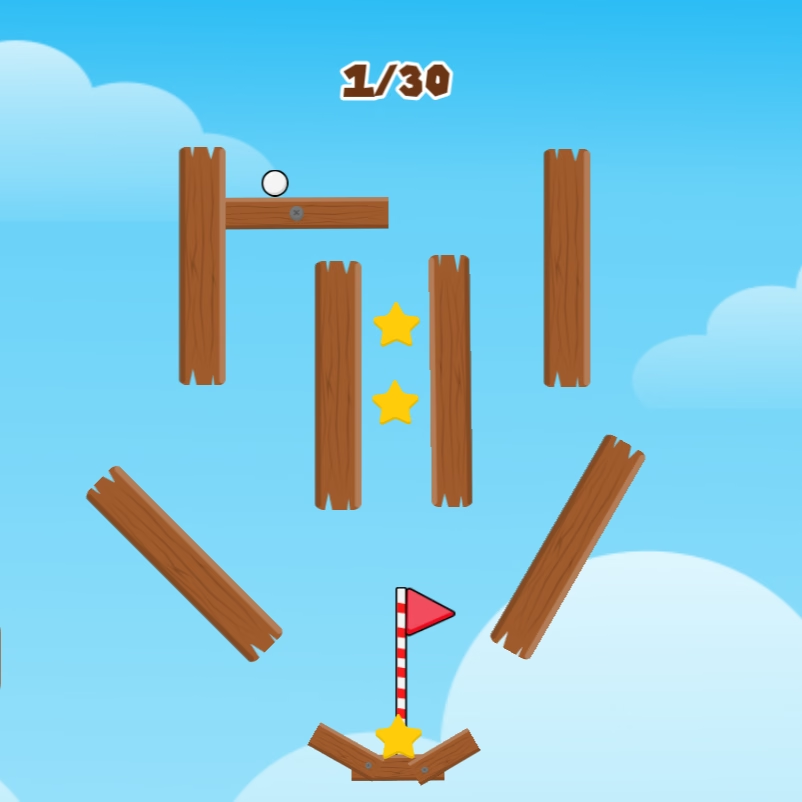
Sky Golf hands you the course instead of a club. Holding a direction rotates the platforms, changing their slope and sending the ball rolling under gravity. The cup is still the destination, but you reach it by managing the ground beneath the ball rather than preparing a conventional swing.
That makes momentum the central problem. A tilt can start useful movement, yet holding it for too long can build more speed than the next platform can contain. The floating layout leaves little room for an uncontrolled roll. Small changes, careful observation, and a plan for the next landing are more useful than keeping one direction pressed until the ball appears near the target.
How to Play Sky Golf
Hold the left or right arrow key to rotate the platforms and guide the rolling ball. Change the slope in controlled amounts, keep the ball on the floating course, and bring it into the hole.
- Inspect the next platform, gaps, and the target hole.
- Hold a direction briefly to create a useful slope.
- Watch the ball’s movement and adjust before it reaches an edge.
- Guide it across the remaining course and into the cup.
Controls & Timing
Rotation changes the ground
The arrow keys turn the platform arrangement rather than aiming a club. Think about which slope will move the ball toward the next safe area.
Motion outlasts an input
Releasing a direction stops your rotation input, but the ball can keep rolling. Judge its existing movement before adding more tilt.
Edges demand advance planning
A floating platform gives limited space to correct a fast roll. Begin changing the slope before the ball reaches the point where recovery becomes difficult.
Controls
| Input | Action | When to use |
|---|---|---|
| Hold Left arrow | Rotate the platforms counterclockwise. | When adjusting the slope. |
| Hold Right arrow | Rotate the platforms clockwise. | When changing the roll direction. |
| Release the direction key | Stop adding rotation. | When the platform angle is suitable. |
High Score Tips
- Observe after a short adjustment. A brief tilt shows how quickly the ball responds without committing to a large rotation. Use that information before holding the key for longer.
- Prepare the receiving platform. When moving between parts of the course, consider the slope where the ball will arrive. A reachable landing is less useful if its angle immediately sends the ball off again.
- Reduce speed before the final approach. Near the cup, large tilts create unnecessary motion. Make smaller adjustments so that the ball has a chance to settle into the target instead of racing past it.
- Avoid alternating keys without a purpose. Rapid reversals can make the result difficult to read. Choose each correction in response to the ball’s actual direction and speed, then observe its effect.
Key Features
- Course rotation. The player controls platform angles instead of striking the ball.
- Gravity-driven rolling. Slope and existing motion determine the route.
- Floating layouts. Gaps and exposed edges make safe landings important.
- Two-direction input. Left and right rotation create a compact but precise control scheme.
Frequently Asked Questions
Where is the swing button?
This game uses platform rotation instead of a club swing. Hold the left or right arrow key to change the slope and let gravity move the ball toward the hole.
Which direction does each key rotate?
Left rotates counterclockwise and Right rotates clockwise. Watch how that change affects the surface beneath the ball, since the useful input depends on the current platform angle and route.
Why does the ball keep moving after I release?
Releasing ends the rotation input rather than instantly removing the ball’s motion. Observe its speed and the remaining slope before deciding whether another adjustment is needed to keep it safe.
How can I avoid rolling over an edge?
Begin correcting before the ball reaches the boundary. Use its current speed to judge how much room remains, and avoid building unnecessary momentum on a short or exposed platform.
What helps near the hole?
Use smaller changes in slope and watch the resulting roll. A gentle final approach gives more opportunity to reach the cup than a large rotation that sends the ball quickly past it.