







About Minigolf Master
What makes a good hole in Minigolf Master: getting near the cup quickly, or finishing with fewer strokes? The difference becomes clear when a strong opening shot leaves the ball in sand or behind a barrier. This is a putting challenge in which the complete route matters. Direction and force need to serve the same plan.
Courses combine slopes, sand, water, and walls, while a star rating rewards an efficient finish. Progression gives you more layouts to solve and harder challenges to work toward. The useful question before a stroke is what it leaves you able to do next. A modest opening can support a strong result when it avoids a difficult recovery and creates a clear final putt.
How to Play Minigolf Master
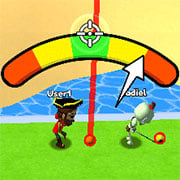
Drag back from the ball to set direction and strength, then release to putt. Navigate the course obstacles and finish efficiently within its available shots to improve the star result.
- Read the hole and its stroke target.
- Choose a route that accounts for walls and surface changes.
- Prepare a putt with force suited to its intended landing.
- Complete the hole and use the result to identify an avoidable stroke.
Controls & Timing
Par gives context
The displayed stroke target tells you what an efficient route should achieve. Use it to evaluate the complete hole rather than one impressive-looking shot.
Sand changes the continuation
A putt that reaches sand can lose useful travel. Decide whether crossing that surface is worth the more difficult approach it may leave.
Stars reward efficiency
Fewer wasted strokes improve the completion result. An unlocked course is an opportunity to learn a route before trying to optimize it.
Controls
| Input | Action | When to use |
|---|---|---|
| Hold on the ball | Begin preparing a putt. | Before choosing the route. |
| Drag backward | Set direction and shot strength. | While judging the target distance. |
| Release | Take the shot. | When the aim is ready. |
High Score Tips
- Separate safe from excessively cautious. A tiny shot that solves no angle problem still costs a stroke. Use a short approach when it creates a clear next line, not merely because it feels comfortable.
- Find the first avoidable recovery. Review where the ball stopped needing progress and started needing escape. Removing that mistake can improve the score more reliably than attempting a much harder opening shortcut.
- Include slopes in the power decision. Distance on the screen is only part of the route. Observe how an incline or dip affects travel and adjust the force accordingly on the next attempt.
- Compare like-for-like attempts. When refining a hole, keep the intended route stable while testing a small change. This makes the relationship between the power choice and the final position easier to understand.
Key Features
- Stroke targets. Each course gives efficiency a concrete reference point.
- Star-based results. A cleaner route is reflected in the completion rating.
- Mixed terrain. Walls, slopes, sand, and water require different route decisions.
- Progressive challenges. Further courses and difficulty options extend the putting challenge.
Frequently Asked Questions
What should I inspect before the first putt?
Look at the stroke target and identify the obstacles between the start and cup. That combination helps you decide whether a direct attempt or a planned approach offers a realistic finish.
Why did the ball stop sooner than expected?
Check whether it crossed sand or climbed a slope. Those parts of the course affect travel, so a familiar pull can produce a different stopping position on a different surface.
How do I earn a better star result?
Reduce wasted strokes across the entire hole. Start by removing unnecessary recovery shots, then refine the route; a risky opening is only useful when it also leaves an efficient finish.
Should I always play a short, safe shot?
No. A short shot needs a clear purpose, such as opening a blocked angle. If it leaves essentially the same problem, it may spend a stroke without improving the route.
How can I learn a difficult bank shot?
Choose the intended wall contact and observe where the ball travels afterward. Adjust one part of the setup at a time so you can distinguish an angle error from unsuitable power.