






About Andy’s Golf 2
Start Andy’s Golf 2 by reading the ground between the ball and the hole. The mouse prepares both the line and force of the shot, and releasing commits the putt. From there, the course determines what happens: a clean route may lead straight to the cup, while a poorly judged approach leaves another stroke to recover.
The appeal is in making a round gradually cleaner. You do not need a complicated control scheme to understand why a shot failed, but you do need to distinguish direction from strength. A hole-in-one is a satisfying result when the layout allows it; elsewhere, an approach that leaves an easy finish can keep the overall stroke total under control. Each new hole asks you to apply the same simple actions to a different arrangement.
How to Play Andy’s Golf 2
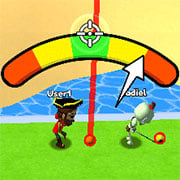
Click and drag to prepare the direction and strength, then release to putt. Get the ball into the hole and continue through the round, aiming to use fewer strokes as you learn the layouts.
- Locate the cup and read the intervening ground.
- Prepare a line toward the cup or a useful approach position.
- Adjust the drag to match the required distance and release.
- Finish the hole and reassess the next layout before another shot.
Controls & Timing
One gesture, two decisions
The drag changes direction as well as strength. Set a clear line first, then make the power adjustment without unintentionally changing that line.
A useful first position
A stroke need not finish the hole to help the round. A landing that makes the next putt straightforward can be worth more than extra distance into trouble.
A round-wide result
The objective is efficient completion across the holes. Recover from a poor attempt with a sensible next shot rather than chasing an immediate miracle.
Controls
| Input | Action | When to use |
|---|---|---|
| Click and hold | Prepare the stroke. | Before setting the aiming line. |
| Drag | Adjust direction and strength. | While judging the required travel. |
| Release | Hit the ball. | When the shot is prepared. |
High Score Tips
- Identify the finishing angle. Look for the clearest way into the cup before choosing the opening target. This helps decide where a first putt should stop if it cannot finish directly.
- Do not repeat the opening force near the cup. A long first shot and a short final putt solve different distance problems. Rebuild the strength choice from the current position instead of repeating a familiar drag.
- Preserve a line that almost worked. When the ball travels on course but stops a little short, make a measured power change. Large corrections can turn a nearly solved hole into a new guessing exercise.
- Use the final resting place as feedback. The early roll may look accurate before a rebound changes the outcome. Base the next attempt on where the ball finishes, including any awkward angle it creates.
Key Features
- Mouse-based preparation. Aiming and strength are handled in a short drag-and-release action.
- A sequence of holes. The round develops through different course layouts.
- Low-stroke objective. Efficient approaches matter alongside direct hole-in-one attempts.
- Readable shot feedback. The roll and stopping position show what to change on the next putt.
Frequently Asked Questions
How do I take a shot?
Click and hold, drag to set the line and strength, then release. Prepare the intended landing before committing so that the gesture serves a clear route rather than an uncertain guess.
Do I have to get every hole in one?
A hole-in-one is an excellent result, but the broader goal is a low stroke total. Choose a practical approach when a direct attempt would leave a difficult recovery after a miss.
What should I change when I overshoot?
If the direction was correct, reduce the force before replacing the line. Keeping the useful part of a shot makes it easier to learn the distance needed for that particular approach.
Why can a shorter first putt help?
It can stop in a position with a clear view of the cup. The extra approach is worthwhile when it avoids several recovery strokes that a more aggressive route is likely to require.
How should I handle a bad hole?
Finish it with the simplest available route, then approach the next layout on its own terms. Rushing to compensate for an earlier mistake usually makes the next power and angle decisions less reliable.