







About Fabby Golf
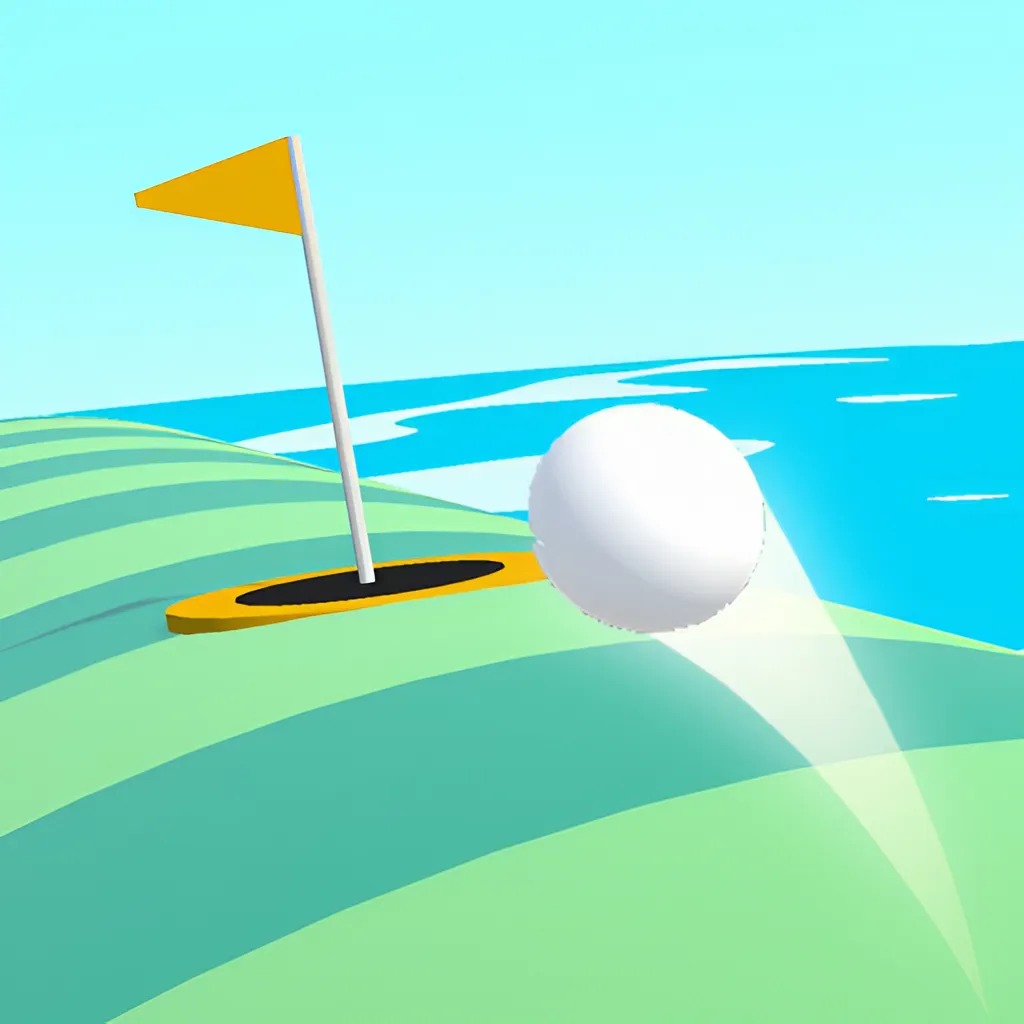
Fabby Golf makes the opening shot the whole problem. You prepare a direction and power, release, and try to put the ball straight into the hole in one stroke. There is no reason to plan a comfortable second putt: the level asks you to solve the entire route with the shot you are setting now.
That constraint changes how a miss should be read. A ball that travels close to the cup has supplied useful information about the angle or force, even though the level is not yet solved. Keep the part that worked and adjust the part that failed. Compact courses make those differences visible, while obstacles can require a bank shot instead of an unobstructed direct line.
How to Play Fabby Golf
Hold and drag to prepare direction and strength, then release. Sink the ball in one shot to clear the level; after a miss, use the result to make a specific correction on the next attempt.
- Inspect the cup and anything blocking its direct line.
- Choose the full route for a single-shot finish.
- Set the aim and strength, then release.
- Advance after a successful shot or refine the failed attempt.
Controls & Timing
One stroke must do the work
A useful approach position is not enough for this objective. The planned route needs to carry the ball into the hole without relying on a follow-up putt.
Preparation controls the attempt
Both direction and strength are chosen before release. Use the aiming stage to resolve uncertainty rather than expecting a later correction to repair the shot.
A miss can narrow the answer
Observe whether the ball missed beside the cup or crossed the right line with the wrong strength. Those results suggest different adjustments.
Controls
| Input | Action | When to use |
|---|---|---|
| Hold the mouse button | Start preparing the shot. | Before selecting its direction. |
| Drag | Set angle and power. | While checking the complete route. |
| Release | Take the shot. | When ready to attempt the hole-in-one. |
High Score Tips
- Start with a clear geometric route. Decide whether a direct line is possible before experimenting with power. If a barrier blocks the path, solve the angle problem first.
- Make small corrections near success. When a shot almost works, a large change discards useful information. Adjust the part responsible for the miss while preserving the rest of the setup.
- Account for the complete rebound. A bank shot needs enough strength after contact to reach the cup. Inspect the outgoing line rather than aiming only at a convenient point on the wall.
- Do not confuse speed with accuracy. A harder shot gives less margin around a small target and may overshoot. Use force that serves the route rather than treating maximum travel as progress.
Key Features
- Hole-in-one objective. Each level asks for a complete finish from one stroke.
- Compact 3D layouts. Short courses make direction and obstacles easy to inspect.
- Angle-and-power aiming. The preparation gesture determines both parts of the shot.
- Iterative attempts. Misses provide information for refining a particular solution.
Frequently Asked Questions
Can I finish with a second putt?
The level objective is a hole-in-one. Plan the full route with the opening shot, then use an unsuccessful attempt to refine the next try rather than relying on a follow-up stroke.
How do I change shot strength?
Adjust the drag while preparing the aim, then release. Match the strength to the full distance and any rebound, rather than choosing a large pull for every layout.
What should I change if the ball passes beside the cup?
Reconsider the angle first when the distance was otherwise appropriate. Preserve useful information from the attempt so that the next shot tests a specific correction instead of a completely new guess.
Can an indirect shot solve a level?
A planned rebound can provide a route around an obstruction. Trace where the ball will travel after contact and ensure that the same stroke can still reach the cup.
Why keep trying a similar shot after a miss?
A close attempt often contains most of the solution. Keeping its successful parts while changing one angle or strength choice helps you converge on a repeatable hole-in-one.