






About Mini Golf Battle
Mini Golf Battle makes its challenge out of small courses with limited room for error. You aim a ball through barriers and ramps toward the cup, balancing direction against the strength needed to complete the route. The sea surrounds the scene, but the important details are on the course: where a rebound leads, which lane is clear, and which approach needs the fewest strokes.
Special tools add alternatives to ordinary putting. Fire, Wing, and Spring offer different ways to change a shot, rather than serving as three names for the same advantage. They are most useful when you understand the problem they solve. A normal putt remains the starting point for reading the layout; a special action can help when distance, a gap, or a raised obstruction changes what that route requires.
How to Play Mini Golf Battle
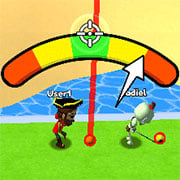
Hold the ball, pull back to choose a direction and power, and release toward the hole. Complete the course in as few strokes as possible, using available special tools when they solve a specific obstacle.
- Read the course layout and find a route to the cup.
- Choose a direct route or plan a controlled rebound.
- Prepare and release the shot, then inspect the new position.
- Use an available tool if needed and complete the hole with an efficient route.
Controls & Timing
A low-stroke route
Every attempt contributes to the total needed for the hole. Make a first-shot plan that leaves a workable continuation if it stops short.
Three different tools
Fire supports a stronger shot, Wing supports gliding travel, and Spring adds a jump or bounce. Choose according to the obstacle rather than spending a tool simply because it is available.
Walls as part of the route
A barrier can sometimes provide a useful rebound. The outgoing line must still lead toward open ground or the cup.
Controls
| Input | Action | When to use |
|---|---|---|
| Hold the ball | Begin aiming. | Before taking a shot. |
| Drag back | Set direction and strength. | While judging the required route. |
| Release | Send the ball forward. | When the shot is prepared. |
High Score Tips
- Include the finishing putt. When planning an approach, account for the shot that may still be needed afterward. Compare the complete route with a direct attempt, including the likely recovery after a miss.
- Use power to reach a position. Extra speed is not useful when it carries the ball past the safe landing. Choose strength for the desired stopping area, including any rebound along the way.
- Try the ordinary solution first in planning. Inspect whether a straightforward shot can solve the layout before choosing a special action. This helps identify what the tool actually needs to change.
- Follow the second leg of a bank. Aiming at the correct wall is insufficient if the rebound enters another barrier. Trace the route after impact before releasing the ball.
Key Features
- Seaside courses. Compact layouts place putting puzzles in an ocean setting.
- Stroke efficiency. A low total rewards routes that avoid unnecessary recovery.
- Special-shot options. Fire, Wing, and Spring offer different ways past difficult terrain.
- Drag-based aiming. Direction and strength are prepared before the shot is released.
Frequently Asked Questions
How do I choose shot strength?
Adjust the pull while aiming the ball, then release when the intended distance is appropriate. Consider the full route, including any wall contact, rather than only the first straight segment.
Why plan beyond the next shot?
A stroke that makes visible progress can leave an awkward finish. Consider the follow-up position before committing, so that the route saves attempts over the whole hole rather than only looking efficient at the start.
What is the difference between the special tools?
Fire increases shot force, Wing supports gliding travel, and Spring provides a jump or bounce. Use an available tool for a particular obstacle instead of assuming they produce identical results.
Can a wall help me reach the hole?
A planned rebound can change the ball’s direction around an obstruction. Check the outgoing angle and required strength, since contacting a wall alone does not guarantee a useful route.
What should I change after an overshoot?
First check whether the ball followed the intended route. If it did, reduce strength before changing the angle; otherwise, revise the line that caused the unwanted rebound or detour.