






About Dig Out Miner Golf
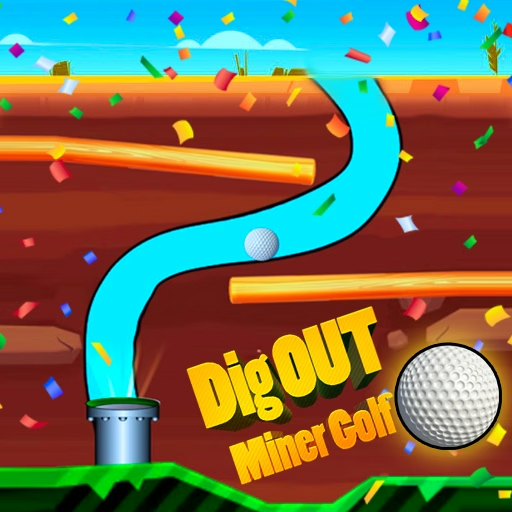
Dig Out Miner Golf puts the important decision in the ground beneath the ball. Instead of selecting the strength of a club swing, you remove earth to create a route. The ball follows the space you open, and traps or awkward terrain can turn an unnecessary cut into a position that no longer leads toward the hole.
This gives the game a different pace from ordinary putting. A useful dig shapes both movement and support: remove enough ground for progress while leaving a surface that guides the ball in the intended direction. Large excavations are not automatically better. A small channel with a clear continuation can be easier to control than a wide opening that releases the ball before the rest of the path is ready.
How to Play Dig Out Miner Golf
Hold and drag over the earth to dig a channel, then stop digging to inspect the result. Shape a route that lets gravity guide the ball around traps and into the hole.
- Locate the hole and inspect the earth and obstacles between it and the ball.
- Plan a channel with a safe continuation toward the target.
- Drag to remove the required ground without opening unnecessary gaps.
- Watch the roll and refine the route until the ball reaches the hole.
Controls & Timing
Removal changes support
Digging below the ball changes what holds it in place. Prepare the continuation before a cut releases it into an unfinished section.
The channel guides movement
The shape of the remaining ground determines where the ball can roll. Think about the slope and exit rather than only the amount of earth removed.
Traps restrict useful excavation
A wide opening can expose a hazard that a narrow route would avoid. Keep dangerous areas outside the channel instead of clearing every visible patch.
Controls
| Input | Action | When to use |
|---|---|---|
| Hold the mouse button over earth | Begin digging. | Where the route needs an opening. |
| Drag through the ground | Remove earth along the chosen path. | While shaping a channel for the ball. |
| Release | Stop removing earth. | When the planned cut is complete. |
High Score Tips
- Plan from the hole outward. Inspect the final entry into the hole, then trace a feasible channel back toward the ball. This helps avoid opening an easy first section that has no workable finish.
- Preserve ground with a purpose. A supporting ledge or guiding side can be useful. Remove earth only when doing so advances the route, rather than treating the entire underground area as something to clear.
- Refine the smallest blocked section. If the ball stops at a bump, inspect that point before widening the whole tunnel. A local correction can restore movement while preserving the rest of a useful path.
- Control the release point. The moment the ball loses support begins its travel through the new space. Ensure that the next section is ready before making the cut that starts the roll.
Key Features
- Digging replaces putting. Terrain editing is the main way to guide the ball.
- Gravity-driven travel. The opened route determines where the ball rolls.
- Underground obstacles. Traps and solid features constrain the available channel.
- Shape-based solutions. A successful route depends on what ground remains as well as what is removed.
Frequently Asked Questions
Where is the normal golf swing?
The main action is digging a route through the earth. Guide the ball by changing the ground around and beneath it, allowing gravity to move it toward the hole.
Should I clear a large area immediately?
Not necessarily. A large opening can remove useful support or release the ball toward danger. Start with a planned channel and keep the remaining ground that helps guide movement.
What should I do if the ball stops?
Inspect the nearby ground for a bump or an unsuitable channel shape. A small adjustment may restore progress without destroying the supporting surfaces that made the earlier part of the route work.
Why plan the tunnel’s exit first?
An easy entrance can still lead into a dead end or trap. Knowing how the channel reaches the hole helps you decide which ground to remove before releasing the ball.
How can I make a difficult route easier to manage?
Break the excavation into purposeful sections and observe the result of each cut. This makes it easier to identify where movement changed instead of losing track after removing a large area at once.