


About GolFrog
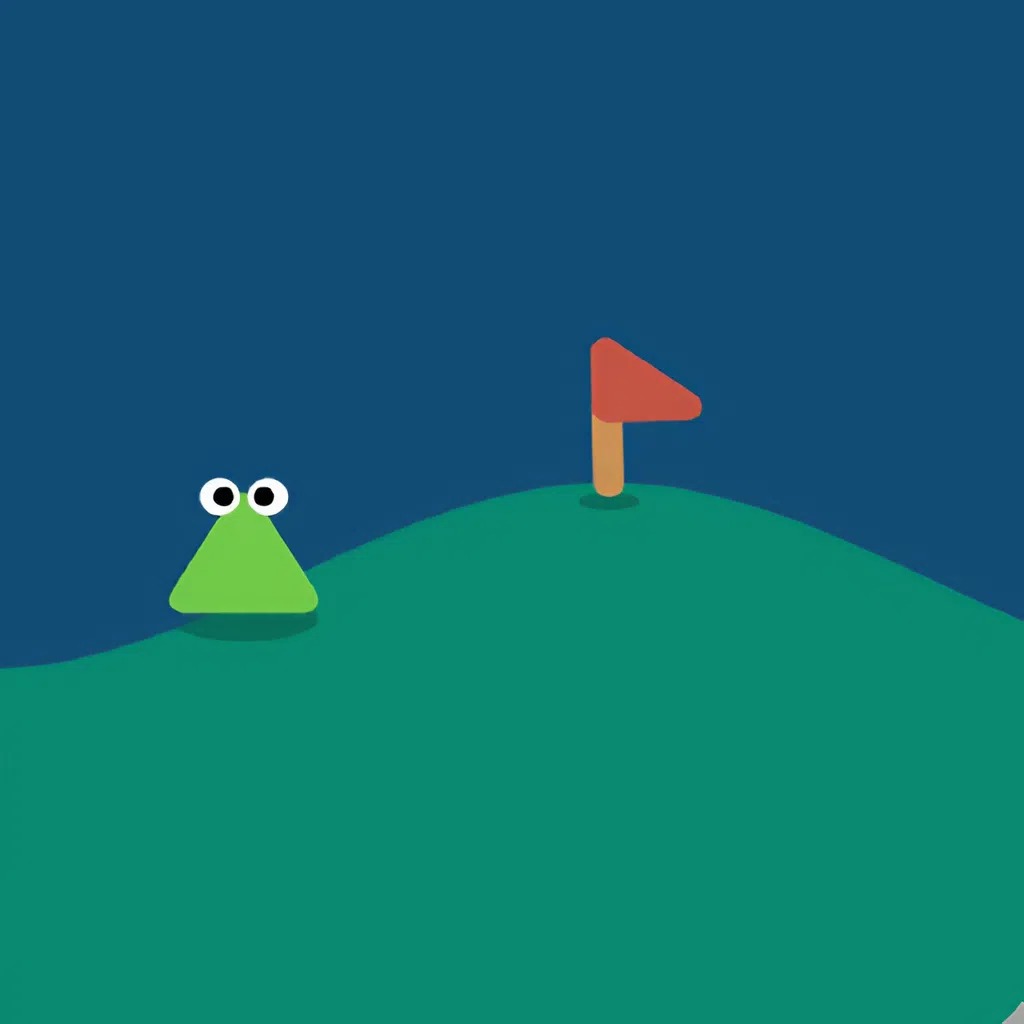
GolFrog is easiest to plan as a chain of landings. The frog takes the place of a golf ball, and your aim sends it jumping toward a flag. Stars tempt you away from the shortest route, while spikes and exposed edges make the choice of landing more important than simply gaining distance.
The practical goal is to connect collection with progress. A star is useful only if the jump leaves the frog somewhere it can continue, and a direct-looking leap can become costly when the next platform is too small. Read the space around each intended landing before launching. This keeps the golf idea of efficient movement while turning the course into a platform challenge rather than an ordinary putting green.
How to Play GolFrog
Drag to aim and release to jump the frog toward the flag. Collect stars on workable routes, avoid hazardous landings, and connect the jumps into an efficient path through the level.
- Locate the flag, stars, and hazards on the next section.
- Choose a reachable landing that supports another jump.
- Prepare the trajectory and release to launch the frog.
- Continue the sequence until the flag is reached.
Controls & Timing
A landing is a future starting point
The result of one jump determines the angle available for the next. Choose where the frog should finish rather than aiming only at something along the arc.
Stars can change the sequence
A collection jump may leave the direct route. Include the return toward the flag before deciding that the detour is worth taking.
Hazards affect the whole arc
Avoiding a spike at the destination is not enough if the path crosses danger earlier. Inspect the jump from takeoff to landing.
Controls
| Input | Action | When to use |
|---|---|---|
| Hold the aiming input | Prepare a jump. | Before leaving the current position. |
| Drag the mouse | Choose the jump trajectory. | While targeting a safe landing. |
| Release | Launch the frog. | When the route to the landing is ready. |
High Score Tips
- Work backward from the flag. Find a landing from which the final jump looks manageable. Then select earlier positions that can connect to it, reducing the temptation to launch without a full route.
- Prefer space over marginal reach. A slightly closer platform with a generous landing can be more useful than the farthest reachable edge. The extra room gives the next jump a more stable starting point.
- Collect stars in compatible groups. Look for pickups that can fit into the same direction of travel. Reversing repeatedly for isolated stars can create awkward approaches and more opportunities to hit a hazard.
- Keep a successful opening sequence. If a later jump fails, retain the earlier landings that worked. Refine the troublesome section so each retry builds on information instead of changing the entire route.
Key Features
- Frog-based golf. A jumping character replaces the conventional rolling ball.
- Flag destinations. Reaching the flag completes the level’s central objective.
- Star routes. Collectibles encourage evaluating optional jumps.
- Platform hazards. Spikes and difficult landings make trajectory planning essential.
Frequently Asked Questions
Am I controlling a normal golf ball?
No. You aim a frog’s jumps toward a flag, using the same idea of efficient movement in a platform layout. Focus on landing positions and the jump they allow next.
Should I aim directly at every star?
Check the landing beyond it first. A star can lie along a useful route, but a jump that collects it and leaves the frog in danger does not make a good sequence.
How can I reduce wasted jumps?
Plan several useful landing positions before starting. Each jump should create progress or collect something along a workable continuation, rather than moving the frog into another awkward angle.
Why can a long jump be less useful than a short one?
The farther landing may leave little safe space or a difficult next angle. Judge a jump by the continuation it creates, not only by how much distance it covers.
What should I change after hitting a hazard?
Find the part of the trajectory that crossed danger and revise that section. Preserve earlier landings that were reliable so the next attempt tests a clear correction instead of a completely different route.