



About Golf In Dungeon
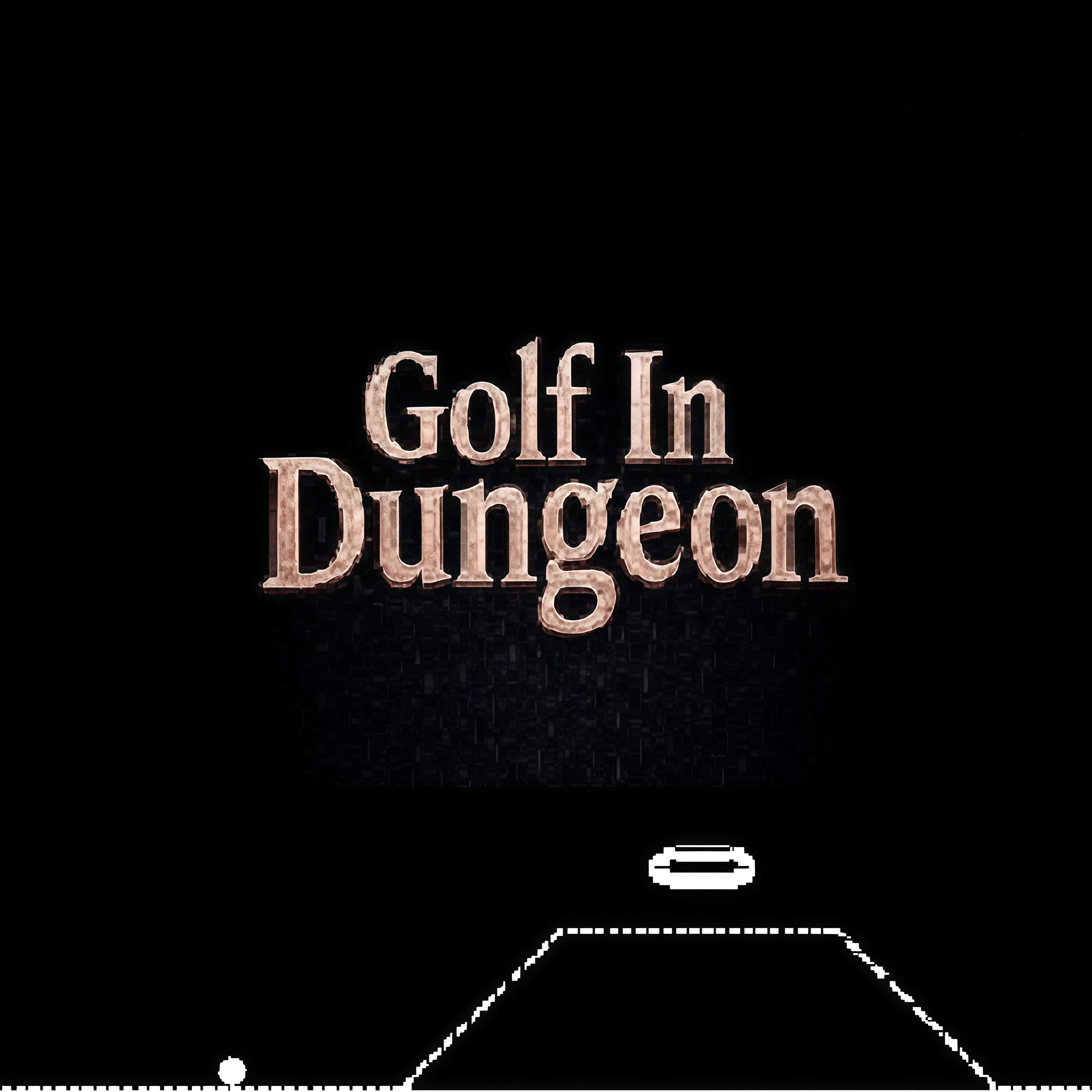
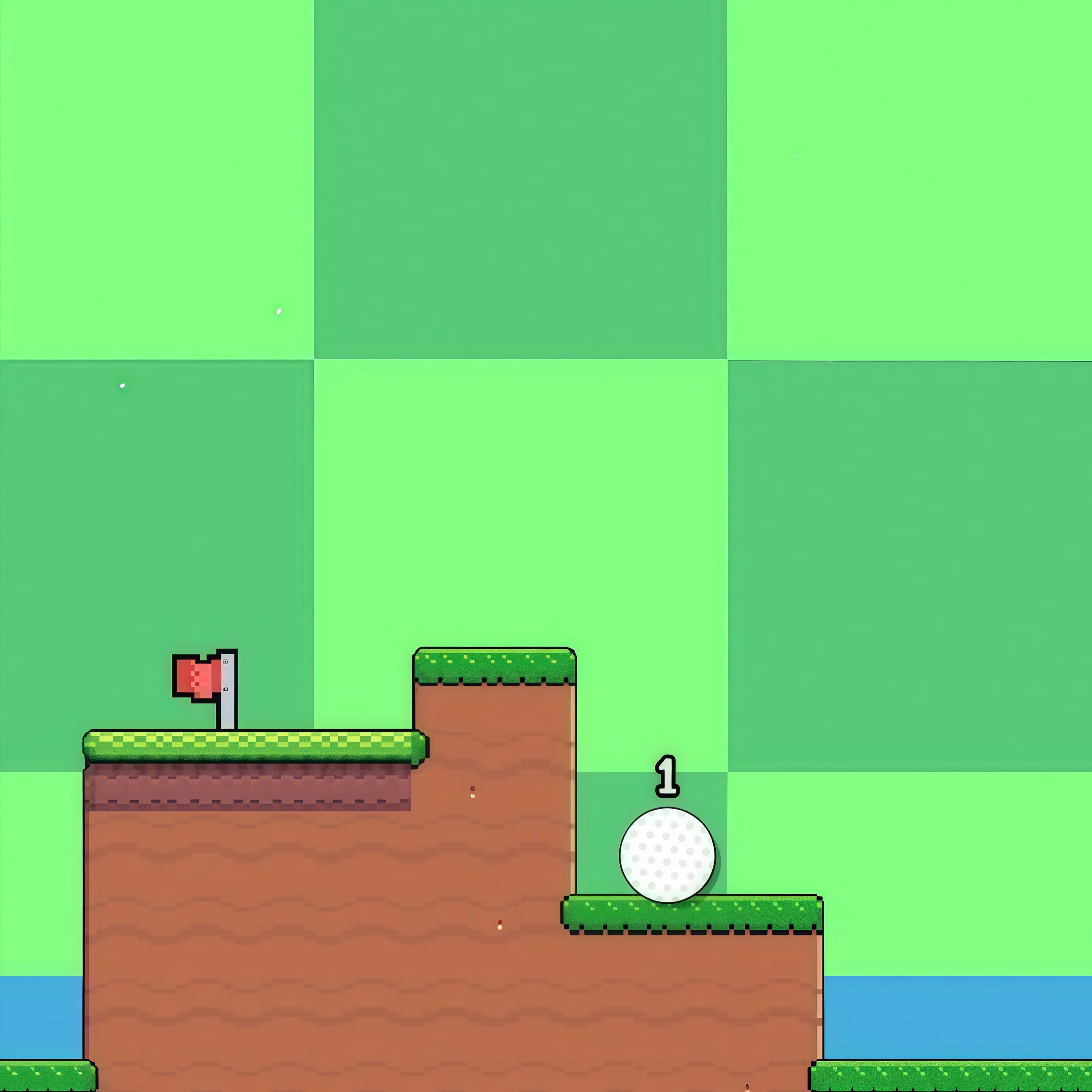
Golf In Dungeon makes the trajectory itself the problem. You push a ball through a dungeon layout, adjusting the direction and force of each move to avoid traps. A successful shot must clear the immediate obstacle and leave the ball somewhere useful; reaching the far side of a gap is insufficient if the landing leads straight into danger.
The setting changes the meaning of a golf mistake. On an open green, an overshoot may leave another putt. Here, narrow passages and hazardous surfaces can stop the attempt. The course is therefore best read as a sequence of safe positions. Work out what each push needs to accomplish, then use the observed movement to refine the next decision rather than adding force without understanding the route.
How to Play Golf In Dungeon
Hold and drag to prepare a push, then release to move the ball through the dungeon. Avoid traps and connect safe positions until the ball reaches the finish.
- Identify the next obstacle and the safe space beyond it.
- Choose a trajectory that clears danger without excessive travel.
- Prepare the push and release.
- Observe the landing and plan the following section toward the finish.
Controls & Timing
Trajectory includes the landing
Clearing a barrier solves only the first part of a shot. Check that the remaining movement does not carry the ball onto a trap after the obstacle is passed.
Force controls the margin
Too little force can fail to reach useful ground, while too much can remove the room to stop. Choose strength for a specific landing rather than maximum distance.
Narrow passages constrain angles
A route through a small opening has little tolerance for a misplaced line. Inspect both the entrance and exit so the ball does not clear one side only to hit danger on the other.
Controls
| Input | Action | When to use |
|---|---|---|
| Hold the ball’s aiming input | Prepare a push. | Before crossing the next section. |
| Drag | Set the intended trajectory and force. | While inspecting obstacles and landing space. |
| Release | Send the ball along the prepared path. | When a safe continuation is planned. |
High Score Tips
- Divide the dungeon into safe sections. Look for positions that give a clear next move. This reduces a complicated layout to a series of manageable trajectories and makes a failed section easier to diagnose.
- Avoid grazing a hazard unnecessarily. A line that barely clears a spike demands more precision than one through open space. Use the wider margin when it still reaches the same practical landing.
- Observe the first wrong contact. When a shot fails, identify where its path first departed from the plan. Correcting that event is more useful than changing the final target while repeating the same collision.
- Distinguish height from distance. A shot may need to clear something without travelling much farther afterward. Consider the shape of the trajectory as well as its reach before increasing force.
Key Features
- Dungeon setting. The course is built around hazardous passages rather than a conventional fairway.
- Ball-based movement. Each push carries the ball through the next section.
- Trap avoidance. Safe travel is necessary before an efficient finish is possible.
- Trajectory planning. Angle, force, and landing space must work together.
Frequently Asked Questions
What is the main objective?
Guide the ball through the dungeon and reach the finish without falling into traps. Plan the route through safe positions rather than treating the game as a long-distance hitting challenge.
How is the ball controlled?
Prepare a push by holding and dragging the aiming input, then release. Choose the intended landing first so that direction and force are set for a specific section of the dungeon.
Why does a shot fail after clearing an obstacle?
The ball may still have too much movement or an unsafe landing ahead. Inspect the space beyond the obstacle, because clearing its front edge does not guarantee a successful continuation.
Is more force useful in a narrow passage?
Only if the route needs it. Excess travel can reduce the margin near hazards, so judge the required clearance and stopping space before increasing the strength of the push.
How should I revise a failed route?
Find the first contact or landing that went wrong and adjust that part. Keep earlier sections that worked so the next attempt tests a focused correction rather than a completely unrelated plan.