
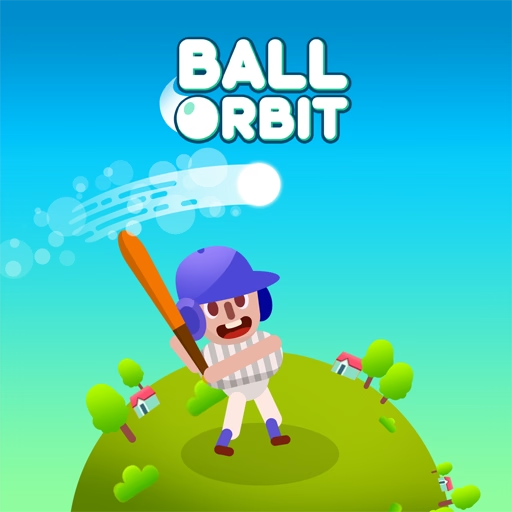






About Ball Orbit
Ball Orbit removes innings and fielding from baseball and keeps the satisfaction of the hit. A single timed input sends the ball on a distance run, and the result becomes currency for improving future attempts. There is no team to position or batting order to manage: the challenge is to make this launch outperform the last.
The ball’s journey gives meaning to the Strength, Speed, and Bounce upgrades. The first hit starts the motion, but useful travel can continue through later rebounds. Because the target is your own record, a short attempt is not a missed tournament opportunity. It is another reward and another piece of feedback about the timing and performance of your current setup.
How to Play Ball Orbit
Click or tap to hit the baseball at the right moment. Let the distance attempt resolve, collect its currency, and upgrade Strength, Speed, or Bounce to give the next launch more potential.
- Watch the launch timing and select your moment to hit.
- Follow the ball until its travel ends.
- Compare the result with your previous distance.
- Spend earned currency on an available improvement and try again.
Controls & Timing
A record rather than an innings score
The recurring benchmark is how far the baseball travels. You can concentrate on improving one shot without managing the structure of a conventional baseball match.
The value of a rebound
A ball that keeps moving after contact can extend the result beyond its initial flight. Bounce upgrades belong to this later phase of the attempt.
Incremental improvement
Each purchase changes the capabilities available to later hits. Timing and upgrades work together, so neither should be used as an excuse to ignore the other.
Controls
| Input | Action | When to use |
|---|---|---|
| Left mouse click | Hit the baseball. | At the chosen moment in the launch timing. |
| Tap | Hit using touch input. | When playing a touch-supported version. |
| Click upgrade options | Improve available ball attributes. | After collecting a run reward. |
High Score Tips
- Keep a simple observation routine. After each run, note the launch quality and the stopping point. Two observations are easier to use than trying to explain every collision at once.
- Do not judge progress by one record. A particularly favourable bounce can produce an unusually long run. Look for improvement across several shots instead of expecting every new attempt to exceed that exceptional result.
- Review all three attributes. A stronger start, faster travel, and more effective rebounds serve different purposes. Choose deliberately instead of spending on the first button you see.
- Use a short run constructively. Take its reward, identify the most obvious timing error, and make one adjustment. That gives the next attempt a purpose beyond simply hoping for a better number.
Key Features
- Baseball distance format. The hit is the focus rather than a full competitive match.
- Personal-best challenge. The next meaningful target is a farther run.
- Three upgrade categories. Strength, Speed, and Bounce provide persistent development within the game.
- Simple launch input. A click or tap starts a complete physics-driven attempt.
Frequently Asked Questions
Do I play a complete baseball match?
No. This version concentrates on hitting a baseball for distance. Your attention goes to launch timing, the flight result, and upgrades rather than fielding or moving players around bases.
How are rewards connected to distance?
Farther travel produces more in-game currency. That currency can then improve the ball’s performance, linking a successful attempt directly to the potential of later hits.
Which upgrade should I buy first?
There is no verified universal purchase order in this guide. Compare current prices and what your attempts are lacking, then review the effect over several similarly timed shots.
Why is bounce important?
A run includes what happens after the ball first lands. Better rebounds can extend useful movement, so the initial airborne arc is not the only part worth watching.
Does every attempt have to beat my record?
No. An attempt can still earn currency and teach you about the launch without becoming your longest shot. Personal records are a benchmark, not a requirement for every useful run.